
Reprint

Travelling white
The Sunday Times Magazine
April 26 1998
By Brian Deer
Every year thousands of British volunteers embark on an awfully big adventure: to help the Third World. But Voluntary Service Overseas, VSO, funded by £21m of taxpayers’ money, is under attack. Critics say that it does little to fight poverty and a lot to boost volunteers’ careers.
Forty years ago last month, a letter appeared in The Sunday Times that was to produce a remarkable effect. It was from the Bishop of Portsmouth, one Launcelot Fleming, who proposed a new form of social action to bolster Britain’s impact overseas. He had just finished chairing a committee of the nation’s great and good that had probed the then-emerging rock ‘n’ roll culture – and he had come to the conclusion that there was Something To Be Done with what he described as “suitable boys”. Rather than be corrupted by newfangled pinball machines, motor scooters and other contemporary vices, he felt that young chaps (he never mentioned girls) should go and do Good Work around the world.
“I know of urgent appeals from Sarawak, from Uganda and from west Africa,” he wrote, in a 350-word epistle to this newspaper, printed under the headline The Year Between, “not for money but for volunteer assistance, in the field of primary teaching, youth work, community development, adult education and social welfare generally, where a readiness to give service would not only be of value in itself, but could act as an inspiration to the young people of these countries.”
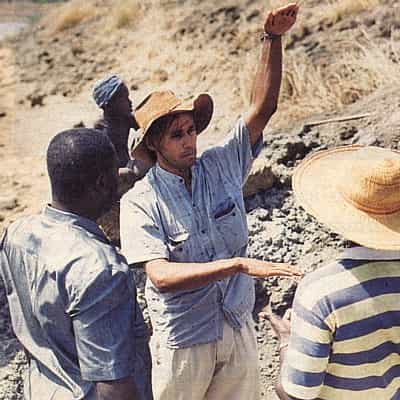
This letter is now pasted into the front of my notebook as I fly with photographer David Harrison above an orange west African landscape. We are seated near the back of a 19-seat Beech 1900C, built in Wichita, Kansas, heading 400km north from the city of Accra, the coastal capital of the republic of Ghana. Seated around us are six Protestant missionaries who chatter excitedly about “planting churches”. I ask their leader if business is good. He grins and tells me it’s “excellent.”
We are here because of what grew out of that letter: Voluntary Service Overseas, or VSO. After its publication, on March 23 1958, a retired colonial official named Alec Dickson, in cahoots with Fleming, contrived an apparently spontaneous write-in campaign from friendly headmasters and chums overseas, giving Sunday Times editors and the newspaper’s readers the impression of a groundswell of support. Letters poured in and, within weeks, what had been a sub-editor’s inspiration to fill a single-column, two-line correspondence page heading was taken up as the interim title of this body. They called it “The Year Between”.
How the bishop squared taking part in this deception presumably god only knows, but 1958 was as different an era to ours as the Beano is from Nintendo. Many columns of that weekend’s Sunday Times were filled with talk of the H-bomb. The paper reported that 40% of households had television sets, and the radio listings included such Light Programme treats as the Billy Cotton Band Show. Celebrity medical stories included news that Lady Harwood had mumps, and the page 1 splash was:
SIR WINSTON IS
‘NOT TOO WELL’
In this environment, the bishop’s proposal must have sounded like a Billy Bunter jape. “If, as I believe, there will be no difficulty in finding volunteers,” he explained, “it will be necessary for some body – or bodies – to accept responsibility for three things: for selecting suitable boys and suitable projects, for finding travelling expenses, and for ensuring that at the other end there is someone who will meet the boys and set them on the right road.”
*****
I had arrived in Ghana as VSO’s guest. They were looking for anniversary publicity. Four decades ago this summer, The Year Between had sent its first crop of suitable boys to this, the first modern African country to retrieve independence from Britain. Also travelling on our expedition, courtesy of the British aid budget, were two of the organisation’s local staffers and one of those original pioneering youths – now himself a headmaster – retracing the right road “to make a video”.
The original plan had been to take a different journalist, who was scheduled to fly to Accra, attend a catwalk show featuring work by the organisation’s “fashion volunteers”, check-out the beach and then go home to write. But she belatedly discovered that she would be entering a yellow fever zone and balked at the mandatory shot. So instead they got me, and I straightway changed the brief to VSO’s work with the poor. Hence the flight north: Fan Airways, FA 812, from Kotoka International to Tamale.
I suspected rural poverty would be more taxing than fashion, and did a fast cuts job for background. Along with interviewing VSO staff, including its director David Green, at its south-west London headquarters, I’d clipped, scanned and pasted a bunch of extracts from its publications and news reports into my notebook. As the Beech slumped and soared above scattered straw-roofed settlements, I did what I could to absorb the contents, so as not to waste time spent on the ground.
The VSO stuff suggested that it had come a long way since Fleming and Dickson’s scam. The suitable boys requirement was progressively phased out, and by now more than 22,000 volunteers of both genders and all ages have travelled overseas – with nearly 2,000 presently deployed in 59 countries. They perform various tasks, including teaching, nursing and engineering, for locally-based employers, who pay them. This year, VSO will nevertheless spend more than £21m of British taxpayers’ money – four fifths of its total income – thanks to Clare Short’s Department for International Development.
“How do we define ‘volunteer’?” asks a shiny blue-on-white text, which I may have clipped from the annual report. “Look up the word ‘volunteer’ in the dictionary. It will describe someone who freely offers their services with no promise of remuneration. We have our own definition.” (Surprise) “We see VSO volunteers as people who share our values. They all see adventure, enjoy challenge and are motivated by the prospect of living and working in a community with a very different outlook. Qualified in their particular field of work, they want to share their skills by doing a real job from day one. In return, they receive a modest financial package and accommodation – plus the experience of a lifetime.”
This wasn’t even true. Volunteers spend up to half their time in training, not doing the job from day one. But when I turned to the news clips, a somewhat darker picture emerged than even this “help-yourself-helping-others” kind of hype. Marking the organisation’s tenth anniversary in 1968, The Observer (whose reporter may have been on a freebie like mine) noted volunteers’ motives to be “uniformly non-idealist,” and quoted one Julie Wootton (“a slim, 23-year-old brunette from Hampshire”) stating: “Actually, my living conditions are better here than they would be if I worked in Britain. People acted as if I were going to a steaming jungle. Well, I didn’t expect quite that, but I certainly didn’t expect hot baths and a houseboy.”
I thought count me in, as the missionaries chatted about their project to train preachers in Bolgatanga. But the press coverage also showed that despite its popularity, the organisation has proved endlessly controversial. In 1971, for instance, The Times noted criticisms from a commonwealth education conference, declining acceptance of volunteers by former British colonies, and reported: “With more than a little regret VSO has been forced to phase out its school leaver programme almost completely.”
Much of the criticism focused on nagging accusations that VSO was more concerned with providing adventure holidays than bona fide overseas aid. But there was also evidence that the recipient communities resented the “white children” who arrived. In 1972, The Daily Telegraph announced: “India wants no more foreign volunteers.” The following year, The Guardian reported that the British Foreign Office had cut off funds to the organisation. And by 1981, placements had collapsed to only half their former heyday numbers.
Before leaving London, I had phoned around to check on the hindsight of former volunteers. “It was very good for me, but not very good for them,” was the conclusion of a Sunday Times feature-writer who taught in Algeria in 1963. A senior editor on the Sunday Times Magazine, who taught in Nigeria in the early 1980s, spoke in frighteningly similar terms. “My feeling is that it was a brilliant experience for me, but a complete waste of time for Nigeria,” she said. “People regarded me as being like a cross between Princess Diana and Madonna.”
Back to fashion, then. And that’s not my style. I’m more a Rudyard Kipling kind of guy. As he wrote in 1899, at the peak of Britain’s imperial responsibilities, this Africa thing was no trivial pursuit:
Take up the White Man’s Burden–
Send forth the best ye breed–
Go, bind your sons to exile,
To serve your captives’ need;
To wait in heavy harness
On fluttered folk and wild–
Your new-caught sullen peoples,
Half devil and half child.
*****
It’s a Thursday morning and we are parked under a tree near a mud-brick village called Busa. The location, maybe 200km north-west of Tamale, is picturesque enough for Harrison to get out and expose a couple of rolls of film. To a pale, shallow lake, stream a procession of women to scoop and carry off basins of water. They are dressed in maroon, blue, green and black, and they soften their loads with turbans of coiled cloth. In the distance are more, hauling bundles of firewood. Yet others scrub clothes on rocks. They gossip in Wali, one of Ghana’s 72 languages. Today’s topic, I suspect, is us.
Busa is home to around 3,000 people, living in extended families of mostly a man, wife or wives, plus children and maybe siblings, in mud-walled, thatched-roofed huts. All the classical indicators reveal absolute poverty, which you find throughout Ghana’s north. One doctor serves 54,000 people, compared with 20,000 in the more prosperous south (and 1,900 in England). One fifth can read – half the average for the south. One child in five dies in infancy.
We are here to see the work of a British civil engineer, nominated by VSO as a boutique example for its anniversary media coverage. His name is Krish Seewraj. He’s aged 30. And like the 1968 nominee (she of the hot baths and houseboy), hails from the county of Hampshire. He holds a master’s degree from Coventry University and, before arriving in Africa 18 months ago, worked at a consultancy to London Underground. His mother is a housewife and his father an optician. He’s slim, youthful, handsome and articulate. To permit myself a style note, he looks as good in khaki shirt and shorts as he does barechested in a sarong.
He’s one of around eighty volunteers in Ghana. Nineteen are in the Upper West region. Among them are Chris Bryant, an electrical installation instructor, who teaches at a vocational school. There’s Sarah Richards, a pharmacist, and her partner Malcolm, who work at a health facility. And there’s Peter Glenfield, a horticultural adviser, working on vegetable patches.
VSO’s idea for my time in west Africa was a kind of royal progress, speeding us by Land Rover from one to the next before darting back to Accra for the fashion show. But although this might have given me a sense of the organisation’s breadth, it wouldn’t do much for the necessary depth, to see if their work did any good. So again I changed the plan kindly offered by my hosts, and zeroed-in on Engineer Seewraj.
Getting to meet him meant a nightmare journey from the landing strip at Tamale. After bidding adios to the church-planters, we bounced, swerved and skidded for five hours on dirt tracks, most of which we braved after sunset. It was a bizarre introduction to rural sociology, with the vehicles’ headlamps picking out huddles of natives squatting in pitch dark beside the road. On a lonely stretch, far from law enforcement agencies, we edged into the bush to get past a burning tree, set light at its roots by scavengers.
Seewraj’s job is deceptively simple: to help design irrigation schemes, such as at the 600-metre lake where the brightly-dressed women scooped water. At Busa, the centrepiece is an embankment of heaped orange clay which dams a fragile wet-season river. It was thrown-up in 1956 -a small thank you from the retreating British – and marked a last colonial bequest before the Duchess of Kent came in great silver bird to grant the old Gold Coast independence. There are crude dams like this one all over the Upper West, and many are scheduled for improvement.
The lake is the villagers’ most precious resource. Without it Busa couldn’t survive. Each day is like today, with its ceaseless procession of women. They come to the shore, wade out 10 metres, fill basins and load them on their heads. Each typically carries 35 litres (nearly 8 gallons) an average of two kilometres in distance, approximately seven times every day. Sometimes children help in this extraordinary back-and-forth, but you are more likely to see a female on a bicycle (which is never) than a man lending a hand to this chore.
These are among the world’s 1.3 billion people whose water supplies aren’t healthy or secure. “There can sometimes be a big difficulty with diseases, like guinea-worm and bilharzia,” explains Seewraj, who, like other volunteers, is not actually employed by VSO, but, in his case by Ghana’s Ministry of Food and Agriculture. “Then, as well, the water is used very badly.”
Seewraj and his boss, a European-educated Ghanaian, also with a master’s degree, named Sin Tim, are leading a team which is working at six sites to make better use of this critical resource. At Busa, the plan is to install a valve in the dam and construct a network of irrigation ditches, allowing vegetables to be grown in the dry season. The same is happening at another village we visited, Karni, three hours north by Land Rover.
The Busa project is rudimentary, the technology appropriate. Nothing, in theory, can go wrong. A grid of cement trenches, two-thirds of a metre wide, are being laid in front of the dam. Every 200 metres or so there is a wooden block and a hole opening onto the earth. The idea is that by manipulating water through this system, tomatoes, carrots and lettuces can be grown to complement yams, cassava and corn.
Similar work is going on throughout the region, which is at risk of ecological crisis. Although many parts of west Africa are experiencing increased rainfall as a result of global warming, in northern Ghana, which is mostly arid savanna, it’s diminishing or becoming unpredictable. Satellites, meanwhile, reveal what look like blisters, as each year more than 1,000 square kilometres of trees are burnt or cut.
But if I’m getting to sound like I’m puffing VSO, there’s a snag with Seewraj’s project. According to his calculations, the lake’s wet season catchment area is so small that there’s unlikely to be enough captured rainfall for the scheme to be viable in summer. The number of hectares under vegetables will not actually increase, he says; the area slopes uncomfortably steeply, so water may run off too fast; and when the men open the dam’s valve for dry-season cultivation, the women who come to carry away their basins may find themselves wading in mud.
“You have to draw a line in your own conscience,” he tells me, explaining that an international aid organisation got together with a local politician and decided to implement the project. “Busa is a bad scheme. I’ve said this all along. I prefer to put my energies into those projects that are beneficial.”
The scheme at Karni is one of his favourites, but when we bounced, swerved and skidded up there I had to wonder whether VSO would make the village happier. Dry-season irrigation schemes are notoriously tricky in much of Africa because they tend to attract previously untroublesome pests and can make the soil too salty or alkaline. And as we sat one afternoon under Karni’s acting chief’s tree, one of the community elders stood and sought our advice, assuming we understood such things.
“We are not technical people,” he said. “Do you think what they are doing is good?”
Since our word would apparently be trusted by the natives, Seewraj whispered: “Say ‘yes’, for god’s sake…. Please.”
*****
We returned to Accra by the long way – road – and in a 16-hour drive saw the full sweep of the country, as beguiling as so much of Africa. I hadn’t slept a lot in the previous week, had drunk a lot of tea made with local water and vaguely wished I’d stuck with fashion. I remember us crossing the Black Volta river, where the dry northern savanna gives way to humid rain forest, which swathes the Ghanaian midlands. Then came damp lowlands as we approached the coast, and finally, after sunset, the city, dark and chaotic, suffering seasonal electricity cuts.
One thing that struck me was the huge numbers who waved (mostly children, it’s true) as we passed. We were not quite Madonna, but elsewhere on this continent the accumulated history of colonial conduct has made attitudes to strangers more varied. Unlike, say, in East or southern Africa, the climate here was considered so unhealthy that there was never much land-snatching during days of empire, so white people were often seen as quite benign. One legacy is a respect still granted to Europeans which they can’t always depend on at home.
White aid workers have astonishing status, whoever they are and wherever they come from. As Seewraj told me one morning as we drove up to Karni: “People think that if a white man says that something will happen, then it will happen. It is definite.”
Krish Seewraj was a white man. His local fans stressed this. But in Hampshire (the town of Basingstoke), he was black. We talked about this paradox. He was aware of it himself. And the image he sported – including the necessary bush hat – nagged in my mind almost as much as my worry that some projects might prove to be disasters.
Returning to Accra, this image threw me back to an evening with volunteers in the town of Wa. We had sat in a circle, ten white, one black, and some yelled their orders at waiters. It felt too reminiscent of ex-pats and empires, too loaded, to allow to pass. That night I recorded an interview in my notebook with another volunteer, Bonnie Horbach from Amsterdam. She was 28, a lawyer, and worked on a project in a village called Tibaani (where residents put on a play in our honour). She was a “motivator”, she told me, concerned with “women’s empowerment”, but was quitting to live in Mali after only six months because she had fallen for a VSO man.
“Being white in this society means that you have a kind of superiority, and you can use that,” she explained that evening about her work with the rural poor. Then she talked about funding aid projects in terms that, to me, were no less unnerving. “If you buy a tractor, then at least half should come from the recipient,” she said. “It’s like buying children’s toys. If a child is given a toy he will break it. But if he buys it himself he will look after it.”
Such a casual comparison between black people and children brought me right back to Kipling’s verse. Although, like Seewraj’s comment, it was probably the product of a battered idealism, it ought to make us think about the racial role models being offered to the Third World’s young. Are these authoritative, superior and adult white people providing the kind of “inspiration” of which the bishop was thinking? What worries me is that maybe they were.
But if they seem too faithful to VSO’s strange origins, then Britain has altered in the four decades since Fleming and Dickson’s letter-writing deception. And after the long Conservative years, during which the organisation – a registered charity – came to depend on the taxpayer for an astounding 80% of its income, ministers say they remain to be convinced that this spending is properly used. A white paper on world poverty issued five months ago warned of a review “to ensure that all our resources are used effectively and in accordance with our policy priorities.”
If a report last year is anything to go by, there may be jolts on the road ahead. After investigating VSO’s work in Kenya and at its London headquarters, management consultants accused senior staff of acting as if “the volunteer’s needs are as important, if not more important, than the needs of the overseas partners”. And they warned: “Our view is that the current position is no longer tenable, not least because VSO’s principal funders are interested in alleviating poverty, whether through volunteers or by other means.”
It remains to be seen which way Clare Short will jump, but such is the scale of the organisation’s bureaucracy that any cutbacks may not be too painful. Its two London headquarters buildings house some 200 staff, and at each of its 38 field offices there can be up to another ten. Moreover, although it swallows 1% of Britain’s £2.2 billion overseas aid budget, more than half of its spending is in the United Kingdom, with much of the rest going on air fares and phone bills.
Doubtless VSO can change, as it has been forced to in the past – if only to defend its existence. But British attitudes towards the world and to foreign travel have shifted so much that the desire to experience them as volunteers, rather than tourists, has gone into free-fall decline. The number of applications to the organisation has dropped by more than one fifth in the past two years, while those for technical jobs, such as Seewraj’s assignment, have slumped by more than half.
VSO ‘s response has been to return to its past – launching a 40th anniversary crusade combining nostalgia with promises of personal advantage. The slogan for its new recruitment leaflet is: “A world of opportunities,” and it goes on, not to emphasise service to others, but to explain that “many volunteers find that their skill base has been broadened and their career prospects enhanced.”
Another of its responses that worries some observers is an effort to boost raw numbers of volunteers by diluting its commitment to the poor. Three quarters of potential recruits interviewed last year were actually selected for placements – and with the “fashion volunteers” VSO maintains in Ghana you can see the kind of results. You might justify such activities, as you might justify anything, but I have to ask the question: who exactly is teaching fashion to whom in this hotspot of African design?
The clue, perhaps, was contained in biographies, also pasted in my notebook with the letter. They said that one fashion volunteer (who I never did get to meet) “designed the cover of the latest VSO publicity leaflet ‘Is VSO for you?’, using traditional Ghanaian batik technique.” When she returns to Britain, armed with such skills, it seems likely she will put them to use.
So, that is my story about VSO. I didn’t find servants, but masters. Like the old colonialists, the volunteers are adventurers – and they adventure on the moral high ground. They usually gain more for themselves than for those they aim to help – and although they feel happiest when others seem to benefit, that appearance may sometimes deceive.
And I would reassure the bishop (were he not too dead to sue) that, in the body which he founded with a letter to The Sunday Times, it is still 1958.
The Sunday Times, March 23 1958
Letters to the EditorFrom THE BISHOP OF PORTSMOUTH
SIR – The interest occasioned by the Prime Minister’s Commonwealth tour and the concern expressed generally that there should be a greater realisation of Commonwealth ties lead me to suggest that there is a simple way by which this link could be made more real.
A number of headmasters in this country are very much aware that many of their senior boys including the most gifted are having to wait a year (in some cases even longer) before vacancies become available in universities and in technical training. So many of these young people have something very worthwhile to give; but where and how?
It is, I submit, the underdeveloped territories of the Commonwealth that today offer opportunities of service that would not only make a positive contribution to those countries but would constitute an experience of inestimable benefit to many of our young people. Such service given over limited periods and often under hard or strange conditions would provide interesting and adventurous opportunities to put gifts to useful purpose and to gain experience.
I know of urgent appeals from Sarawak, from Uganda and from West Africa – not for money but for volunteer assistance – in the field of primary teaching, youth work, community development, adult education and social welfare generally, where a readiness to give service would not only be of value in itself, but could act as an inspiration to the young people of these countries.
The projects overseas that I have in mind – some governmental, some missionary, some the responsibility of social service councils – do not postulate specialist skills so much as a readiness to work alongside the local people: their need is urgent, just because of the new problems arising in this period of transition to self-government.
Equally urgent is the need for the best of our young people – in their difficult period of transition before university or career – to have the opportunity of doing something worth while, where it is most genuinely needed, and seeing a bit of the world into the bargain. If, as I believe, there will be no difficulty in finding volunteers, it will be necessary for some body – or bodies – to accept responsibility for three things: for selecting suitable boys and suitable projects, for finding travelling expenses, and for ensuring that at the other end there is someone who will meet the boys and set them on the right road.
Is it beyond our organisational capacity to unite these needs?
Launcelot Portsmouth
Fareham
Another face of charity: The Westway Development Trust
MORE TOPICS:
Bactrim-Septra: a secret epidemic
Research cheat Andrew Wakefield