
Bowel issues pre-dated vaccine
Andrew Wakefield’s fradulent MMR paper of February 1998, left many thinking that a new association between autism and bowel problems had been discovered, along with his claimed link with MMR. But, while this field has been a low priority in pediatric gastroenterology, reports on brain disorders and bowel problems date back to the 1930s, and work by Mary Coleman, a celebrated US paediatric neurologist, documented the link in autistic children in 1974: using reports on symptoms that developed before MMR was even licensed in America – in 1971.
Among other things, Wakefield, working for lawyers, claimed to have discovered a new inflammatory bowel disease, apparently caused by MMR. But Deer’s investigation revealed that almost all of the children ensnared in his research were in fact profoundly constipated. This information, concealed by Wakefield, nevertheless sat well with reports on brain disorders and bowel problems dating back to the 1930s, and particularly with work by Coleman
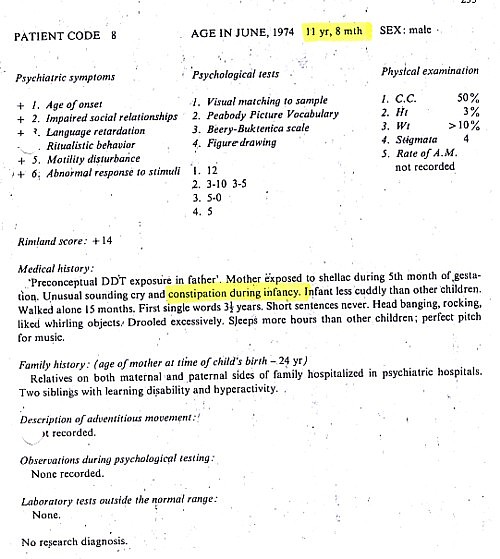
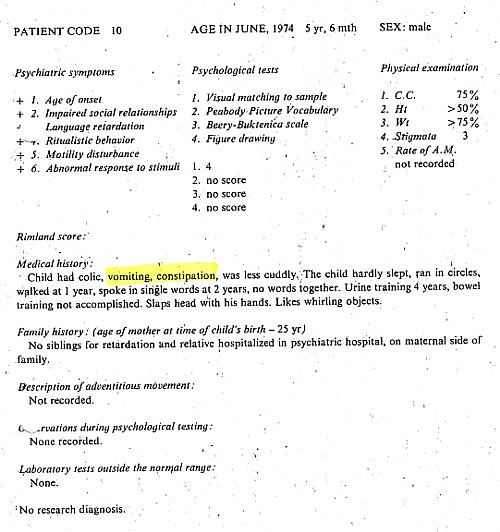
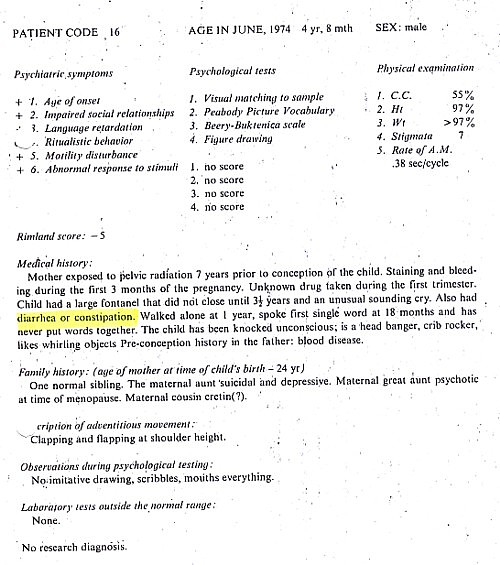
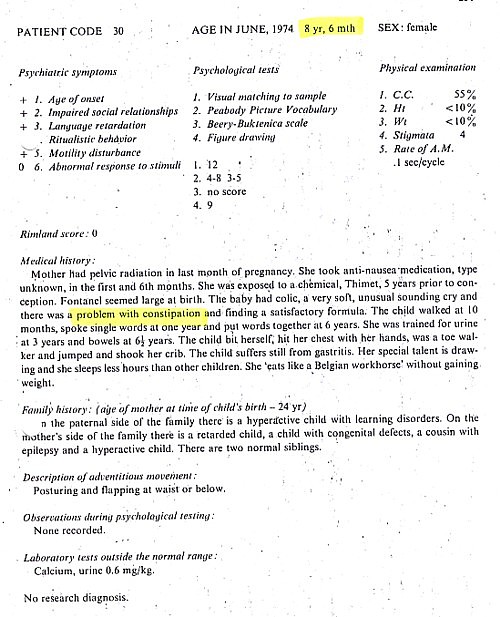
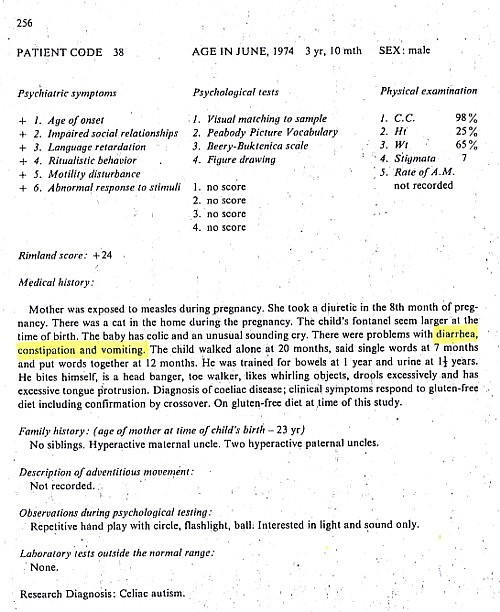
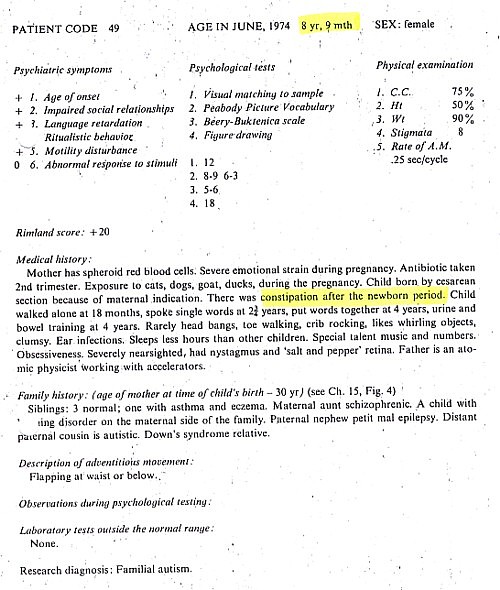
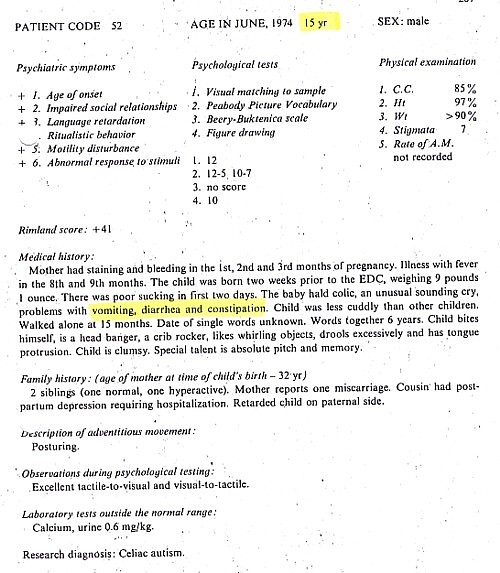
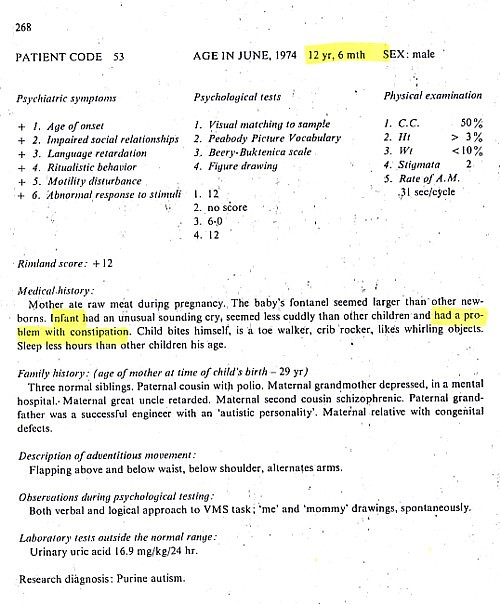
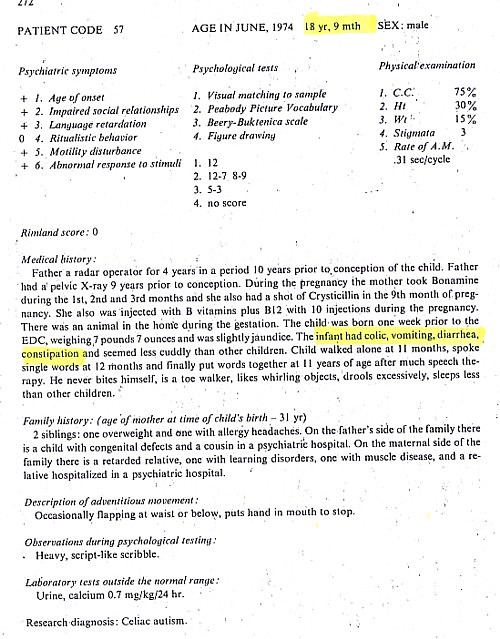
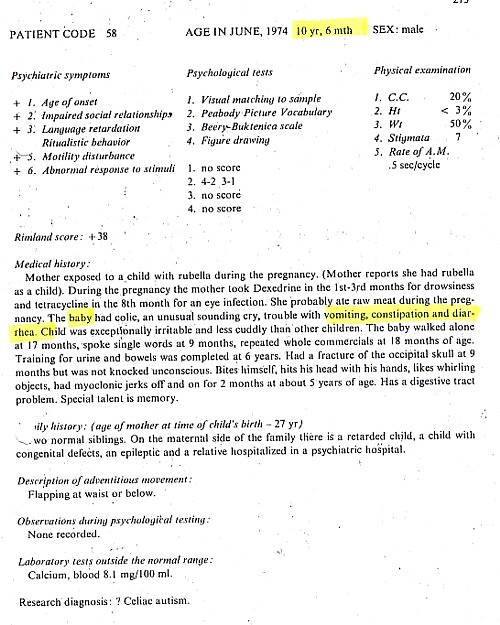
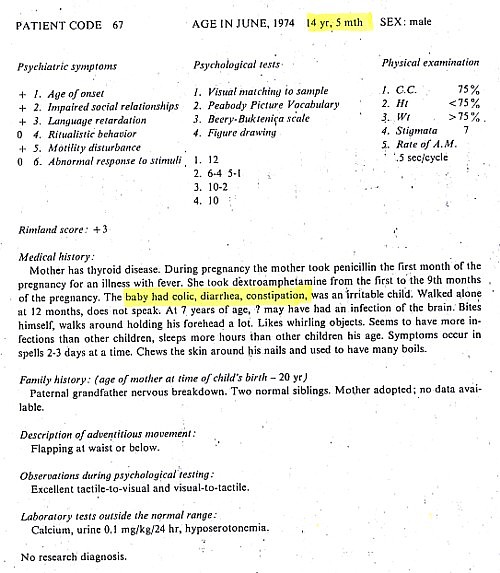
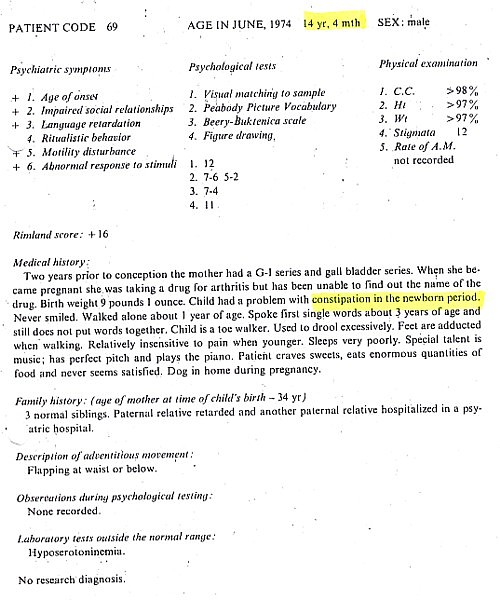
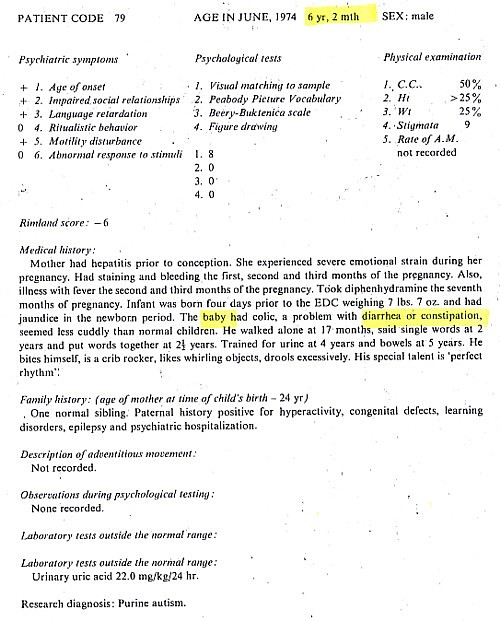
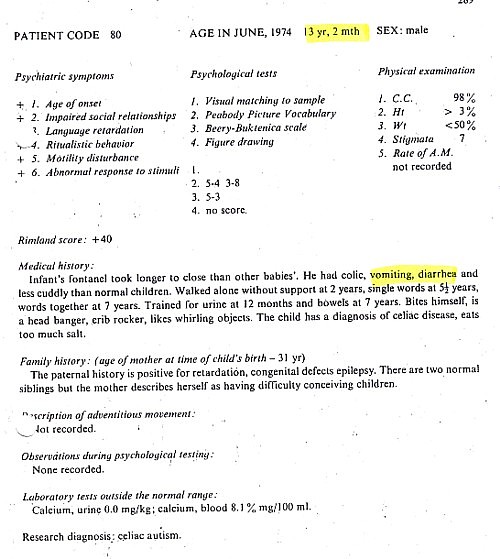
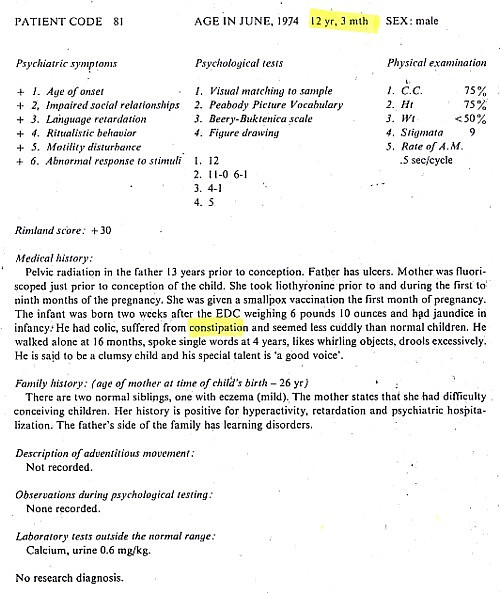
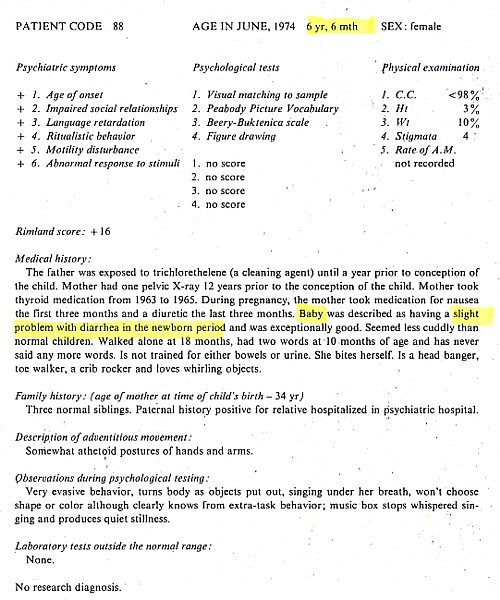
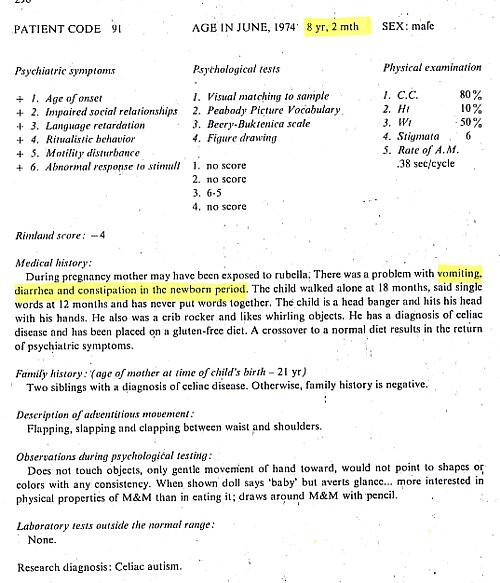
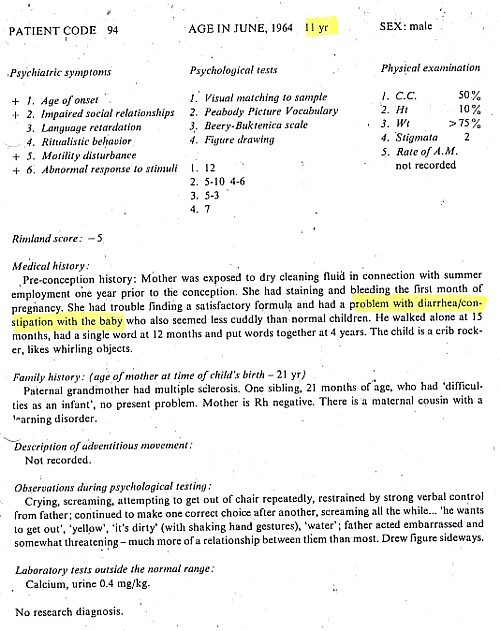
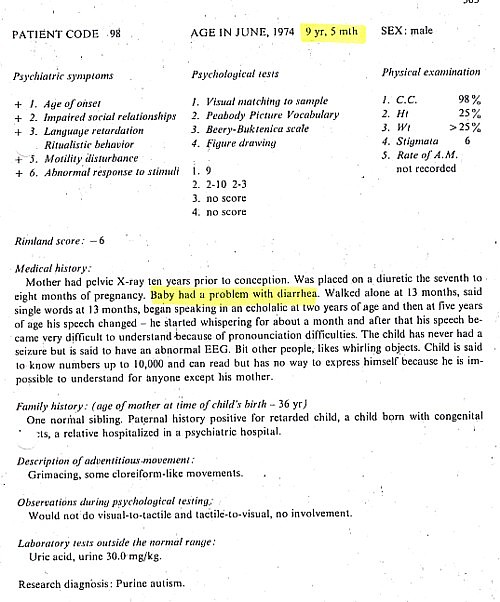
Patient information gathered Brian Deer from The Autistic Syndromes, edited by Dr Mary Coleman, published in 1976. Seventy-eight autistic children with a median age of 9 – were examined at the Children’s Brain Research Clinic in Washington DC, each accompanied by a developmentally normal child of the same age and sex. Patients and controls came in special buses, each delivering groups of four children to the clinic, in the week of June 24-28 1974.
Coleman’s interests focused on identifying different types of autism, but study of her data today – including the children’s ages and the onset of any gastric problems – reveals a disproportionate incidence of bowel problems in autistic children before the MMR vaccine was even licensed in the US. Coleman’s meticulous study reports that “the presence of constipation or diarrhea in 19 of the autistic patients and only 5 of the control children during the newborn period was significant”. As can be seen from the ages reported in the histories, many of these children’s bowel problems began in the 1960s.
RELATED:
Vexatious Wakefield lawsuits fail